

A bathroom refresh runs 4 to 8 weeks of active construction, a full kitchen 6 to 12 weeks, and a whole-home renovation 4 to 8 months, but the total project timeline is almost always longer than the build itself. The rule that keeps any schedule intact: treat it as a chain of dependencies, and lock every long-lead decision (cabinets, tile, appliances, windows) before the crew ever picks up a hammer.
TL;DR:
- Most renovation delays are caused by late selections, hidden conditions, permit backlogs, and trade scheduling conflicts, all of which are preventable.
- Critical path items, such as cabinets and permits, must be ordered early and monitored closely to avoid cascading project stalls.
- Building buffer time of 10 to 30 percent into your schedule helps accommodate unforeseen delays and reduce stress at project end.
- Living through renovation requires setting up temporary essentials, clear communication, and possible temporary housing to manage daily life effectively.
- Locking in long-lead decisions before construction begins and tracking milestones are key to keeping renovation schedules on track.
Table of Contents
- What Is the Typical Home Renovation Timeline, Phase by Phase?
- How Long Does a Renovation Take by Project Type?
- What Are the Critical Path Items That Control Your Schedule?
- What Causes Renovation Delays, and How Do You Avoid Them?
- How Do You Build Realistic Buffers Into Your Renovation Schedule?
- How Do You Manage Daily Life During a Renovation?
- How Does Ariya Construction Keep Renovation Schedules on Track?
- One Habit That Changes Renovation Outcomes
- Where to Check Permit Timing and Planning Rules
- Sources
What Is the Typical Home Renovation Timeline, Phase by Phase?
Every renovation moves through the same sequence, and the pace of each phase determines whether your project finishes on time or drags into a second season. Here's what typically happens at each stage:
- Planning and design (2 to 8 weeks): Layouts, material selections, and contractor scoping happen here. This is also where your renovation planning decisions get locked, or don't.
- Permits and approvals (2 to 12 weeks): Timing depends entirely on your jurisdiction and project scope, so check local planning requirements before you set a start date.
- Demolition and site prep (a few days to 2 weeks): Fast work, but it's also when hidden conditions (old wiring, water damage, structural surprises) surface and can stall everything behind them.
- Structural work and rough-in (1 to 4 weeks): Framing, plumbing, and electrical rough-in happen now, each gated by an inspection before the next trade can start.
- Finishes, fixtures, and lockup (2 to 6 weeks): Cabinets, countertops, tile, and paint get sequenced in a specific order that's easy to disrupt with a late decision.
- Punch list and handover (3 to 10 days): Final corrections, touch-ups, and walkthroughs before you get the keys back to your own space.
How Long Does a Renovation Take by Project Type?
Scope changes everything about how long a home remodeling timeline runs. Here's what to expect for common jobs:
- Bathroom renovation: Active construction typically takes 3 to 6 weeks, with total project time (design through handover) landing at 6 to 10 weeks once permits and selections are factored in.
- Kitchen renovation: Construction runs 6 to 10 weeks, but total project time often stretches to 3 to 5 months because cabinetry and countertops carry long lead times.
- Small internal jobs (paint, flooring, single-room updates): These wrap in 2 to 6 weeks total, with minimal permit involvement in most cases.
- Additions and whole-home renovations: Expect 4 to 8 months of active construction and 6 to 12 months total, since these projects layer structural work, multiple permits, and dozens of trade handoffs on top of each other.
These scope-specific ranges hold up across most residential projects, though local permit backlogs and material availability can push either end of the range.
What Are the Critical Path Items That Control Your Schedule?
A renovation schedule isn't a list of tasks. It's a chain where one late link stalls everything downstream. The clearest example: cabinets get ordered late, which pushes countertop templating, which delays the plumber's sink hookup, which holds up the final inspection. One decision, four dominoes.
Inspections create the hold points that most homeowners underestimate. Watch for these:
- Framing inspection before drywall can go up
- Rough electrical and plumbing inspection before walls close
- Insulation inspection in some jurisdictions before drywall
- Final building inspection before occupancy
While contractors usually arrange inspections, confirming responsibilities helps prevent scheduling gaps that cause delays. A documented renovation schedule that maps dependencies against lead times is the single best defense against this kind of drift.
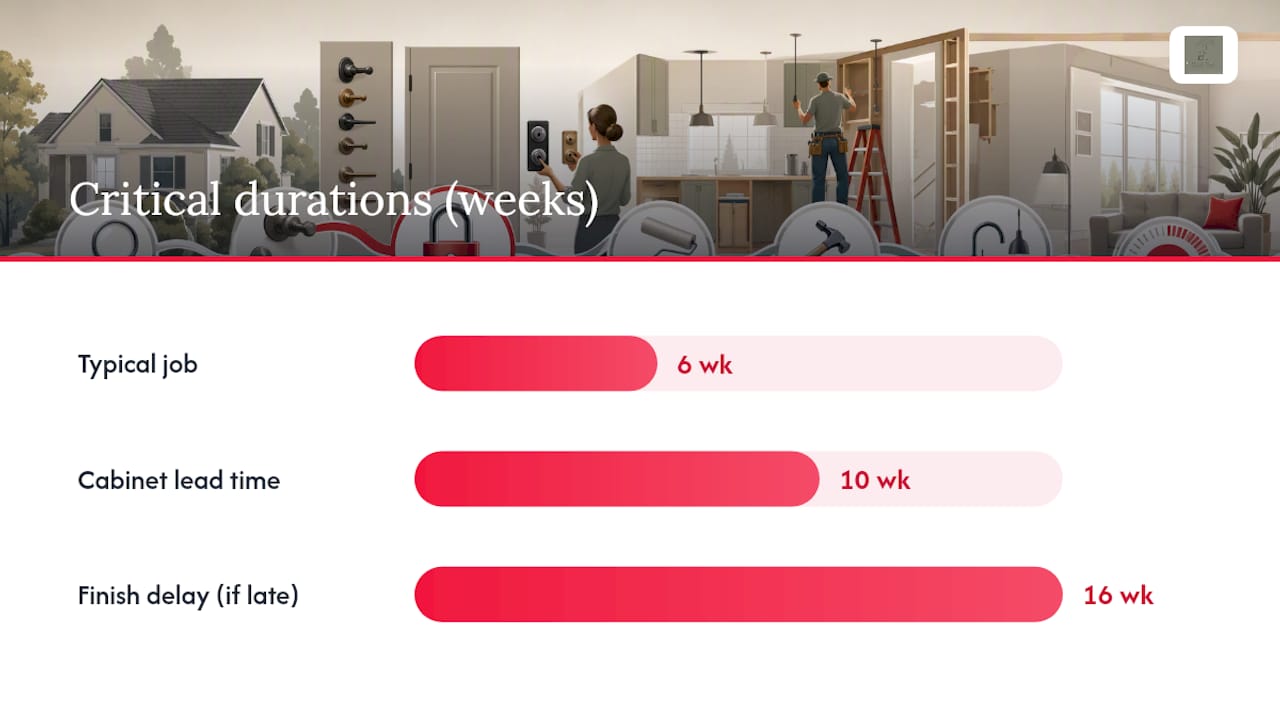
Pro Tip: Ask your contractor for lead times on every item you're selecting, cabinets, windows, custom tile, before you sign off on a start date. A 10-week cabinet lead time discovered after demolition starts is the most common way a six-week job turns into a four-month one.
When you review a contractor's proposed schedule, look for the tasks with zero slack, the ones where a delay pushes the entire completion date. Those are your critical path items, and they deserve your attention long before the crew shows up.
What Causes Renovation Delays, and How Do You Avoid Them?
Most schedule blowouts trace back to the same handful of causes, and nearly all of them are preventable:
- Late selections. Set hard decision deadlines for every material and fixture before construction starts, not during it.
- Hidden conditions. Demolition often reveals problems (rot, outdated wiring, structural issues) that weren't visible during planning, so build a contingency into both your budget and your calendar.
- Permit and inspection delays. Confirm your local review timelines early and book inspections as soon as work is ready, not after.
- Trade scheduling conflicts. Regular milestone meetings catch conflicts between subcontractors before they become multi-week gaps.
How Do You Build Realistic Buffers Into Your Renovation Schedule?
Every renovation timeline should carry three dates, not one: the contractor's target completion, the contractually binding completion date, and your own personal contingency date, set later than both. That third date is the one you tell your landlord, your movers, or your extended family.
- Set your buffer. Add 10 to 30% to the contractor's estimated timeline, leaning toward the higher end for older homes or larger scopes.
- Track milestones, not just dates. Permit approval, demolition complete, rough-in passed, drywall complete, cabinet install, countertop templating, and final punch list each represent a decision point worth checking in on.
- Use a simple visual timeline. A milestone-based calendar (even a shared spreadsheet) makes it obvious when a phase is running behind before it becomes a crisis.
Pro Tip: Give yourself at least two extra weeks beyond the contractor's projected finish date before booking movers, hosting an event, or ending a lease. This single habit prevents more stress than any other scheduling decision.
How Do You Manage Daily Life During a Renovation?
Living through construction is manageable when you set the rules early. A temporary kitchen setup, a folding table, a microwave, a mini fridge, covers most needs during a kitchen renovation, and the same logic applies to a bathroom job if you have a second one to fall back on.
- Agree on dust barriers, storage zones, and site access hours with your contractor before work begins.
- Set a communication rhythm: quick daily updates for site logistics, a weekly meeting for milestones and decisions.
- Board pets or arrange alternate care during demolition and rough-in, when noise and open doors are constant.
- Consider temporary housing if you're renovating your only kitchen or bathroom for more than a few weeks; it's often cheaper than the stress it saves.
How Does Ariya Construction Keep Renovation Schedules on Track?
A renovation firm manages home, kitchen, and bathroom renovations from initial design through final handover, coordinating trades, selections, and scheduling under one dedicated point of contact. The approach centers on locking scope and selections before construction starts and ordering long-lead items early, so a supplier delay doesn't become a demolition-day surprise.
Regular milestone check-ins keep suppliers, trades, and homeowners aligned on delivery windows and inspection bookings....
One Habit That Changes Renovation Outcomes
If I could get every homeowner to do one thing differently, it's this: finalize your long-lead selections before you sign a start date, not after. I've seen more schedules unravel from a slow cabinet decision than from any inspection delay or weather event combined. Push for milestone meetings, build in a real contingency date, and don't treat your buffer as optional padding. When the stakes are your move-in date, a project manager who protects the schedule is worth the conversation.
— Sarah
Where to Check Permit Timing and Planning Rules
Permit and inspection timing varies by jurisdiction, so confirm requirements directly through your local planning authority and building and construction guidance before setting a start date. For sequencing advice and material lead-time planning, a door replacement guide covers how a small selection decision can ripple through an installation schedule.