
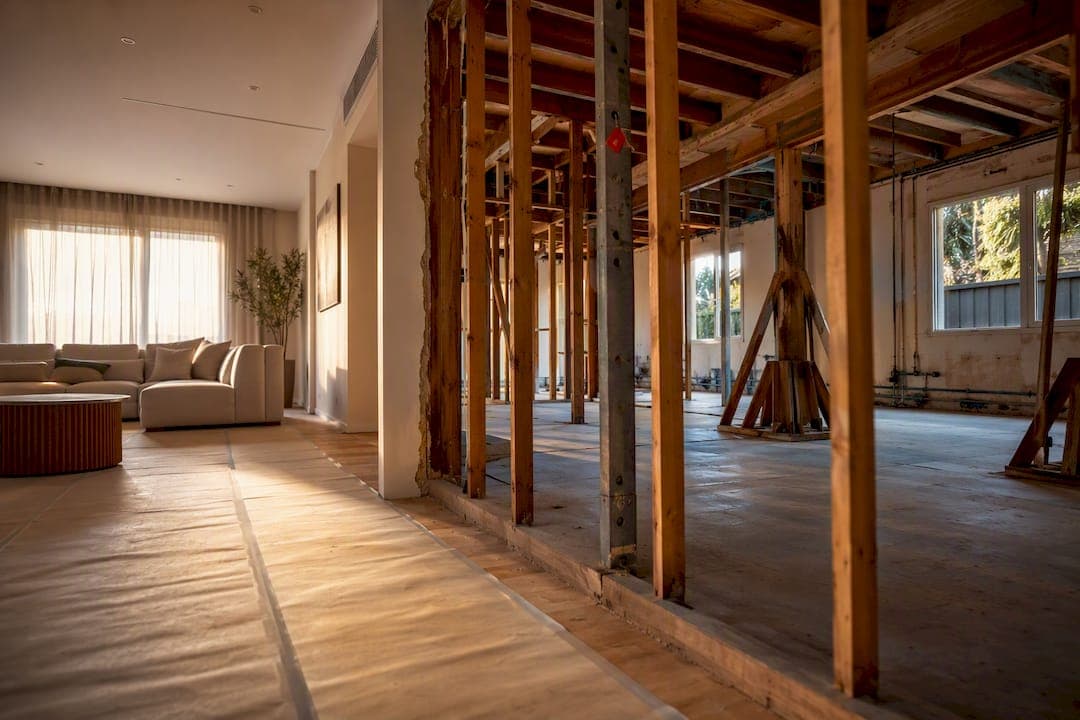
Standard home and contents insurance rarely covers renovation work the way homeowners assume, and most Australian insurers cap or exclude liability for building works once costs pass a certain point, often around $50,000. Before a hammer touches a wall, read your Product Disclosure Statement, tell your insurer what you're planning, and confirm your builder actually carries valid insurance. Skip that step and a straightforward claim can turn into a drawn out dispute.
TL;DR:
- Most standard home insurance policies exclude or cap coverage for renovation costs exceeding around $50,000, requiring separate contract works insurance for larger projects.
- Homeowners must verify that their builder's insurance extends to existing structures and obtain written proof of coverage before starting any renovation work.
- Notifying the insurer with detailed project information before construction begins reduces the risk of claim disputes and potential premium increases.
- Leaving properties vacant beyond 60 to 90 days during renovations can trigger higher excesses or lapses in coverage unless security measures are in place.
- Updating the home's sum insured promptly after completing renovations prevents underinsurance and ensures adequate replacement value protection.
Table of Contents
- Do Standard Home And Contents Policies Cover Renovation Work?
- Builders Insurance And Contract Works Cover: Who's Actually Protected?
- When And How To Notify Your Insurer
- Vacancy, Security, And Unoccupied Excesses During Renovations
- Avoiding Underinsurance: Update Your Sum Insured After Completion
- A Checklist For Protecting Your Cover Before, During, And After The Build
- Ariya Construction's Perspective: What Contractors Can Do To Reduce Insurance Risk
- The Renovation Insurance Mistake Almost Nobody Talks About
- Sources
Do Standard Home And Contents Policies Cover Renovation Work?
Most insurers differentiate between everyday home maintenance issues, like a leaking tap or a cracked tile, which are typically covered under standard home insurance, and major renovation work such as structural changes or full kitchen remodels, which are considered a higher risk category and may not be covered under the same terms.
AAMI's guidance on renovation cover explains that liability protection often stops once the total build cost crosses a set threshold, commonly $50,000, at which point contract works insurance becomes the expected fallback. GIO is blunter still: loss or damage directly caused by building works is frequently excluded outright from a standard policy, regardless of project size.
A few patterns show up across insurer PDS documents again and again:
- Small maintenance jobs (repainting a room, replacing a benchtop) usually stay within normal cover.
- Structural work or anything above the insurer's stated dollar threshold typically needs separate contract works insurance.
- Unnotified renovations can lead to a denied claim, even for damage unrelated to the actual build.
- DIY and unlicensed trade work often voids cover for that specific area of the home, since insurers rely on licensed tradespeople meeting building code standards.
That last point catches a lot of people out. Saving money by doing the tiling yourself on a Saturday can mean an insurer walks away from a claim tied to that exact bathroom later.
Builders Insurance And Contract Works Cover: Who's Actually Protected?
Contract works insurance, sometimes called residential contract works cover, protects the physical building project itself. That includes materials on site, work already completed, and the structure as it's being built, up to the agreed contract value. Tank Insurance notes it typically responds to theft, vandalism, storm damage, and fire during the build phase.
Here's what most homeowners miss: a builder's own policy protects their liability and their works, not necessarily your existing home.
- Check for an existing structures extension. If your renovation involves an addition or partial rebuild, confirm whether the builder's contract works policy extends to the original dwelling, or whether that gap sits on you.
- Ask for the certificate of domestic building insurance. This proves the builder is covered for incomplete or defective work if they can't finish the job.
- Call the insurer directly. Don't just accept a certificate at face value. Ring the insurer named on it, confirm the policy number, and check it's current for your specific address and contract value.
Pro Tip: Never assume "the builder's insured" means your whole house is covered. Ask specifically whether existing structures are included, and get the answer in writing before signing the contract.
When And How To Notify Your Insurer
RACV's renovation insurance guidance is clear that notifying your insurer before works begin isn't optional paperwork. Insurers price risk based on project scope, and a policy written for a quiet suburban home doesn't automatically stretch to cover an active building site.
Before you notify, gather:
- The estimated total contract value of the renovation.
- Start and expected completion dates.
- Your builder's full name, business name, and licence number.
- Proof of the builder's current insurance, including contract works cover.
- Photos of the property's condition before works start.
Skipping this step risks more than a denied claim. Some insurers will still cover you but at a higher excess or adjusted premium once they know construction is underway, so getting ahead of it protects both your cover and your budget.
Vacancy, Security, And Unoccupied Excesses During Renovations
A gutted kitchen or a house mid-extension often means nobody's sleeping there for weeks. That's where unoccupied excess clauses quietly kick in. Finder's comparison of renovation cover notes that most Australian insurers apply unoccupied limits somewhere between 60 and 90 consecutive days, after which cover can lapse or a higher excess applies automatically.
A few practical fixes keep you inside the safe window:
- Track exactly how many consecutive days the home sits empty, not just the total renovation timeline.
- Ask your insurer what security measures they expect (locks, boarding, alarm monitoring) while the property is vacant.
- Arrange periodic site checks or a temporary caretaker if the build runs long.
- Notify the insurer immediately if the vacancy period is going to exceed their stated limit.
Avoiding Underinsurance: Update Your Sum Insured After Completion
A finished renovation almost always raises your home's rebuild cost, and leaving your sum insured at the old figure is one of the most common ways homeowners end up underinsured. RACV's guidance flags outdated sum insured figures as a leading cause of underinsurance claims after a renovation, since the policy still reflects the pre-renovation version of the house.
Insurers and government bodies publish rebuild cost calculators for exactly this reason. A sample Key Facts Sheet from a construction insurer points homeowners toward reading the PDS carefully and using a sum insured calculator rather than guessing.
- Use your insurer's calculator or get a professional valuation for anything beyond cosmetic work.
- Update the sum insured as soon as the renovation is signed off, not at the next renewal date.
- Ask whether your policy offers a safety net or "sum insured plus" buffer for unexpected rebuild cost increases.
A Checklist For Protecting Your Cover Before, During, And After The Build
Insurance gaps rarely open all at once. They creep in through skipped steps, so working through the project in order matters more than any single big decision.
- Read your PDS before signing anything. Know your insurer's specific threshold and exclusions before you commit to a contract.
- Notify your insurer with full project details. Contract value, dates, builder licence number, and proof of their insurance.
- Verify the builder's insurance independently. Call the insurer on the certificate, don't just trust the paper.
- Get everything in writing. A signed contract with scope, cost, and timeline protects you if a dispute arises later.
- Document as you go. Weekly photos, receipts for materials, and a simple log of trades on site each day.
- Secure the property and any stored contents. Lockable storage or a temporary storage unit protects furniture and valuables from site dust, theft, or damage.
- Maintain occupancy or security checks. Especially if the house sits empty past the 60 to 90 day mark most insurers flag.
- Update your sum insured once work wraps up. Send the final contract and receipts to your insurer as proof of the new value.
Pro Tip: Keep a single folder, physical or digital, with every contract, certificate, and dated photo from day one. When a claim happens, the homeowners who move fastest are the ones who already have their paperwork sorted.
Ariya Construction's Perspective: What Contractors Can Do To Reduce Insurance Risk
A reliable contractor makes the insurance side of a renovation far less stressful, mostly by removing the guesswork, as explained by Mr Build Co.. A reliable contractor can reduce insurance stress by supplying insurance certificates upfront, providing a clear project schedule to pass to insurers, and keeping materials secured on site rather than left exposed to weather or theft.
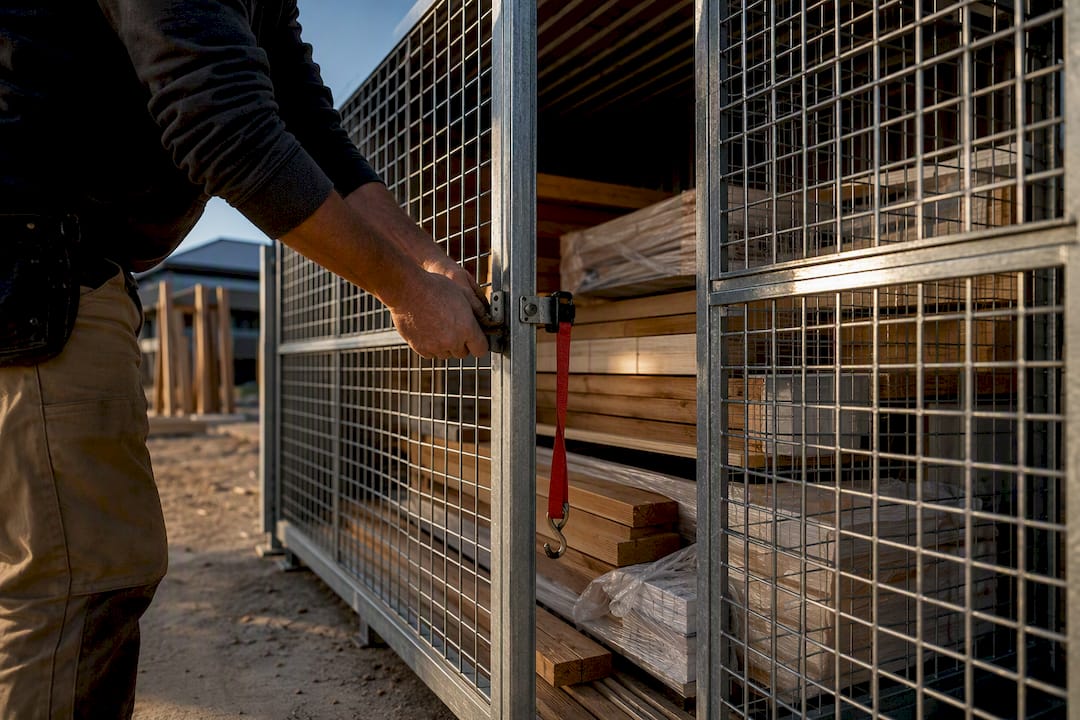
Coordinating trades and documentation isn't just a project management nicety, it's the paper trail that protects a homeowner if something goes wrong mid build. Having a dedicated point of contact managing scheduling and site security can reduce the chance of a gap between what the builder's policy covers and what the homeowner assumes is covered.
The Renovation Insurance Mistake Almost Nobody Talks About
Everyone focuses on whether the builder is insured. Almost nobody asks whether their own existing home is still covered once the builder's policy kicks in. That gap, the space between "the builder's works are covered" and "my actual house is covered," is where most renovation insurance disasters actually happen.
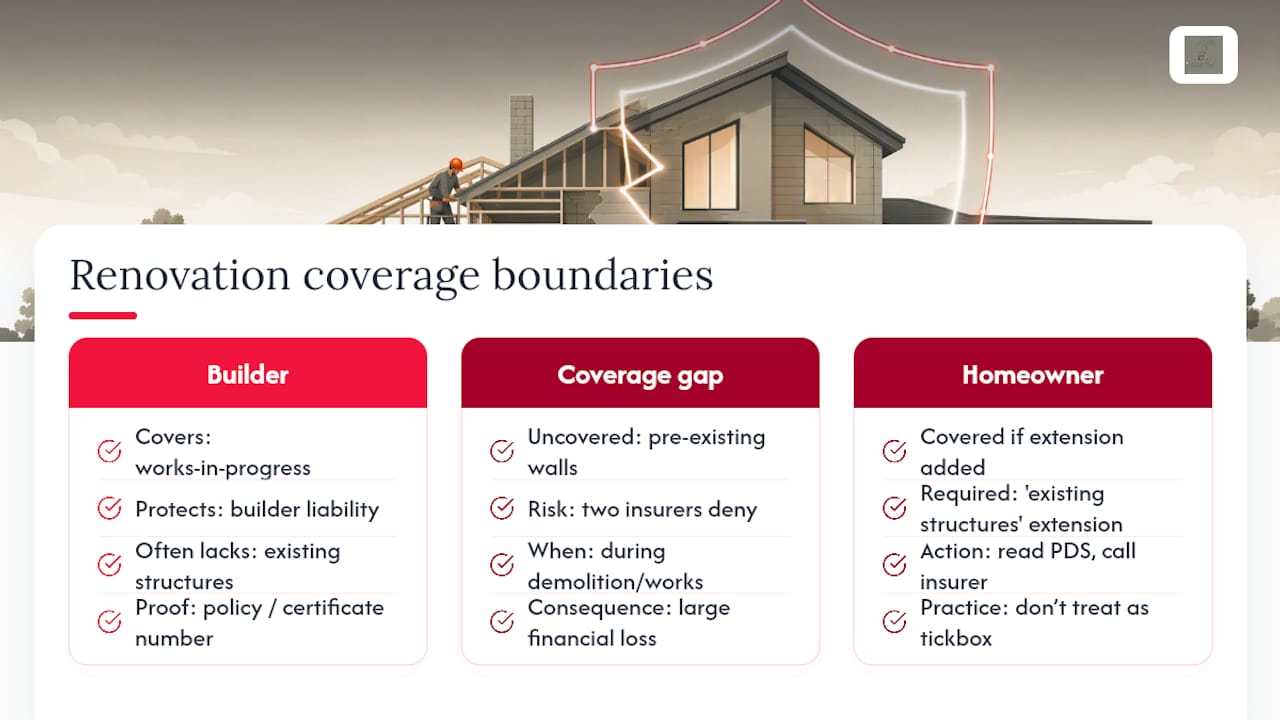
I'd argue the conventional advice, "just check your builder has insurance," is dangerously incomplete. A builder's contract works policy is built to protect the builder's liability and the work in progress. It was never designed to be your home insurance replacement. If there's no existing structures extension sitting underneath that policy, and plenty don't, the walls that were already standing before the renovation started can end up with nobody covering them if something goes wrong.
The fix isn't complicated, but it does take initiative most homeowners don't realize they need. Read the PDS. Ask the specific question about existing structures. Get the builder's certificate number and actually ring the insurer, don't just file the paperwork away. None of that is glamorous, and none of it feels necessary until the week a pipe bursts behind a half finished wall and two different insurers each point at the other. Homeowners who treat renovation insurance as a checklist item to tick off before demolition starts are almost always the ones who avoid that argument entirely.
— Sarah
Sources
Check your insurer's own PDS pages, like those from AAMI or GIO, for exact thresholds. Use MoneySmart to confirm builder licensing rules and get an independent read on contract requirements before signing anything.