
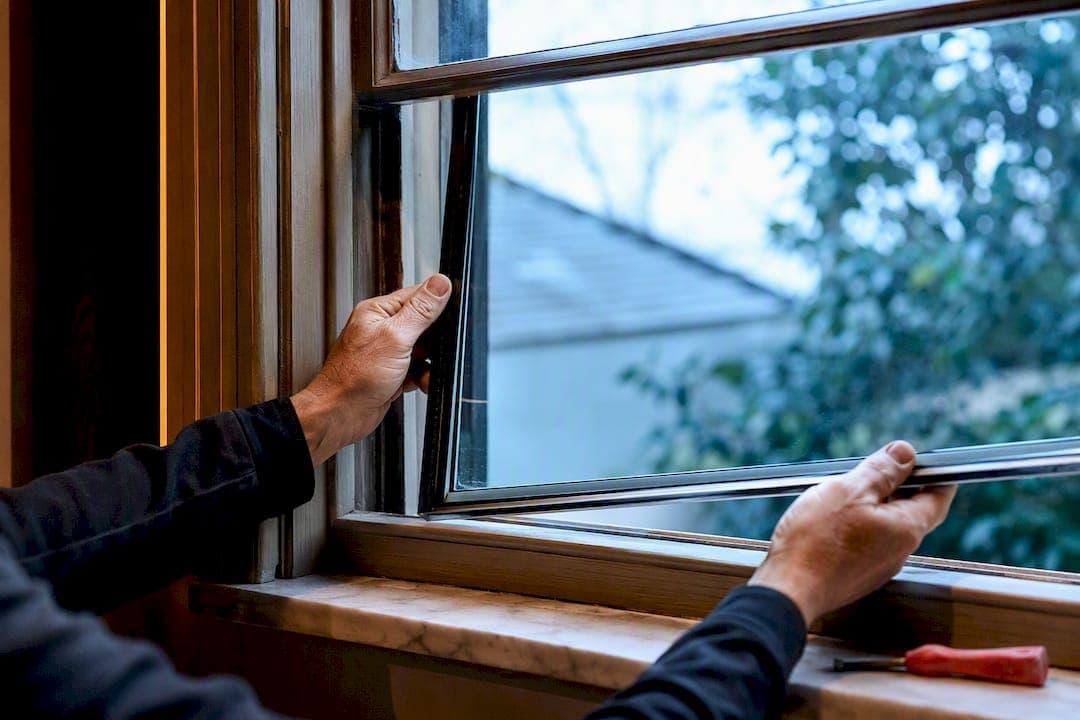
Retrofit double glazing is worth doing when your existing frames are structurally sound, you want to keep the original window look, and your budget doesn't stretch to full replacement. It's the wrong call when frames are rotted, warped, or corroded, or when you need the airtightness and thermal-break performance only a new frame delivers. Everything in between comes down to what your windows can actually support.
TL;DR:
- Retrofit double glazing is most suitable when window frames are solid, and the goal is to maintain the existing look while improving insulation at a lower cost.
- It significantly reduces heat loss through the glass and improves acoustic performance but cannot fix heat conduction issues in older aluminum frames lacking thermal breaks.
- Costs depend on window size, glass specifications, and frame condition, generally taking a few hours per window, with prices approaching full replacement when extensive repairs are needed.
- Common problems include edge condensation in metal frames and hidden rot in timber frames, often caused by poor installation or structural decay that may require additional repairs.
- An inspection should evaluate frame condition, rebate depth, and heritage restrictions, with retrofit often better suited for short-term budgets and replacement preferred for long-term energy efficiency goals.
Table of Contents
- What Is Retrofit Double Glazing, and How Does It Differ From Full Frame Replacement?
- What Does a Window Insulation Retrofit Actually Improve?
- Which Retrofit Method Fits Your Windows?
- Is Your Home Suitable for a Double Glazing Retrofit?
- What Does Retrofit Double Glazing Cost, and How Long Does It Take?
- What Are the Hidden Problems With Retrofit Double Glazing?
- How Long Do Retrofit Double Glazing Units Last, and How Do You Maintain Them?
- How Do Installers Assess Whether Retrofit Will Work?
- Does Retrofit Double Glazing Affect Property Value or Need Council Approval?
- When I'd Recommend Retrofit vs. Replacement
- Get a Site Assessment From Ariya Construction
- Sources
- FAQ
What Is Retrofit Double Glazing, and How Does It Differ From Full Frame Replacement?
Retrofit double glazing means fitting an insulated glass unit into a window opening that already exists, keeping the original frame in place. Full frame replacement rips out the sash, the frame, or both, and installs new thermally broken joinery built for double glazing from the start.
That distinction changes almost everything about the job. Industry best-practice guidance from the Window & Glass Association's retrofit standard describes retrofit as removing the single pane and inserting a factory-sealed IGU into the existing rebate, work that in most straightforward cases doesn't need building consent because it doesn't alter the window's structural role. Replacement almost always involves new fixings, new flashing, and sometimes structural adjustment to the opening.
Picture a 1960s timber sash window. Retrofit means cutting a slim double-glazed unit to fit the existing rebate depth, working around the sash's original proportions. Replacement means pulling that sash out entirely and installing a new uPVC or aluminum unit with integrated weatherseals and a thermal break built into the frame itself.
The practical trade-offs run in predictable directions. Retrofit is faster, cheaper, and preserves the window's original sightlines, which matters if you live in a heritage-zoned property or just like your house the way it looks. Replacement delivers better airtightness and a genuine thermal break in the frame, not just the glass, but it costs more and disrupts your home for longer. Retrofit improves what's inside the frame. Replacement changes the frame itself.
What Does a Window Insulation Retrofit Actually Improve?
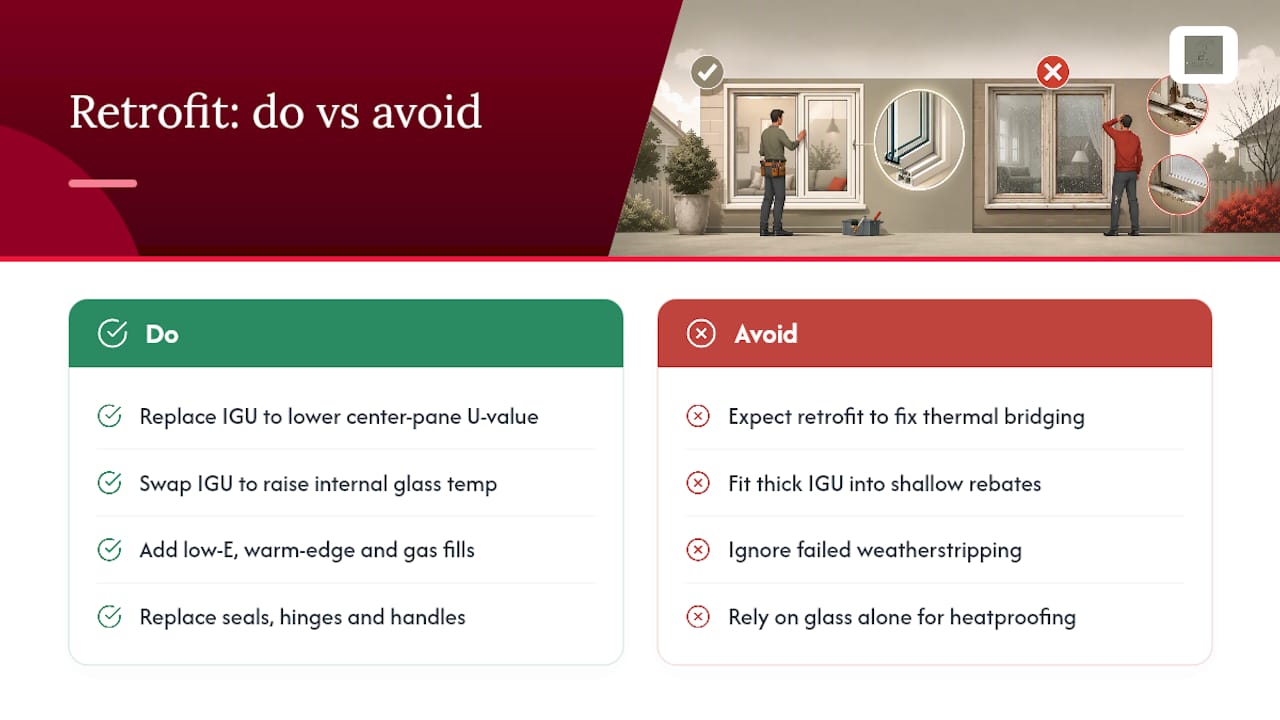
An insulated glass unit swap improves center-pane U-value, meaning the glass itself loses heat far more slowly than a single pane ever could. It also raises the internal surface temperature of the glass, which is why retrofitted rooms feel less drafty even before you notice a temperature change on the thermostat. Acoustic performance improves too, since two panes with an air or gas gap absorb sound a single sheet of glass can't.
Low-E coatings, warm-edge spacers, and argon or krypton gas fills all push performance further, but frame depth caps how much you can fit. A shallow 1970s aluminum rebate might only accommodate a slimline unit with basic performance, while a deeper timber frame can often accommodate a thicker, better-performing IGU.
Good retrofit work goes beyond the glass. Reputable installers typically swap out worn seals, tired hinges, and loose handles as part of the same job, since a new IGU sitting in a frame with failed weatherstripping still lets air through around the edges. That bundled approach is what separates a real upgrade from a glass swap that leaves the draft problem half-solved.
Here's the limit nobody likes admitting: retrofit can't fix thermal bridging in older aluminum frames. Metal conducts heat directly through the frame itself, bypassing the glass entirely, and no amount of IGU upgrade changes that physics. RetroGLAZE's technical comparison confirms that older non-thermal aluminum sections remain a heat-loss pathway even after the glazing itself is upgraded. If your frames are aluminum and pre-date thermal break design, retrofit gets you partway there, not all the way.
Which Retrofit Method Fits Your Windows?
Installers generally offer three approaches, and which one they recommend usually comes down to your frame's depth, material, and how much you're willing to change the window's appearance.
- Insert sealed IGU: A custom-cut double-glazed unit goes directly into the existing rebate after the old single pane comes out. This is the most common method for timber and uPVC frames with enough depth to spare, and it delivers the strongest thermal and acoustic gains of the retrofit options.
- Secondary glazing: A second pane, either magnetic, strip-fitted, or mounted in a sliding or hinged interior panel, sits inside the existing window without touching the original glass or frame. It's the go-to choice for heritage properties where you can't alter the street-facing appearance at all.
- Insert-sash or replace-sash systems: Rather than swapping just the glass, the whole sash gets rebuilt or replaced while the outer frame and reveals stay put. This suits timber sash windows where the frame is sound but the moving parts have failed.
Secondary glazing costs less and disrupts your home less than a full IGU insert, but the performance gap is real. Axiom Eco Homes' retrofit cost breakdown notes that secondary glazing typically delivers a smaller U-value improvement than a bespoke sealed unit, because the airflow between the two panes isn't engineered and sealed the way a factory IGU's gas fill is. It's the right compromise when the alternative is no upgrade at all, not when a proper IGU insert is physically possible.
Insert-sash approaches sit in the middle: more disruptive than a straight glass swap, less invasive than gutting the frame. Installers tend to recommend them when the sash mechanism itself, not just the glazing, is the source of drafts and noise.
Is Your Home Suitable for a Double Glazing Retrofit?
Before you call an installer, walk your own windows and check for the signs that make or break a retrofit job.
- Press the sill and check for movement. Soft spots, visible warping, or any give when you press with your thumb signal frame decay that retrofit won't survive long term.
- Look for corrosion on metal frames. Surface rust on steel or aluminum is usually cosmetic; pitted or flaking corrosion around fixings is a structural red flag.
- Identify your frame material. Timber frames are generally the easiest to refurbish and retrofit. Aluminum frames work for retrofit but keep the thermal bridging limitation in mind. uPVC frames older than 20 to 25 years can turn brittle, and drilling or reglazing brittle uPVC risks cracking the frame.
- Check whether heritage rules or aesthetic preferences restrict changes to the exterior. If they do, secondary glazing solves the insulation problem without touching the street-facing appearance.
- Weigh your ownership horizon against your budget. If you plan to stay 5 to 10 years and want lower upfront cost, retrofit usually wins. If you're building for decades and chasing the lowest possible energy bills, replacement's better airtightness pays off over time.
Pro Tip: Bring a flashlight and a flat screwdriver to your own inspection before the installer arrives. Gently probe the sill and lower frame corners where water pools. If the screwdriver sinks in without resistance, you're likely looking at rot that needs repair before any glazing quote makes sense.
What Does Retrofit Double Glazing Cost, and How Long Does It Take?
Per-window costs for retrofit vary widely depending on size, glass specification, and how much of the existing frame needs repair before the new unit goes in. Cost guidance from Axiom Eco Homes points out that shaped or oversized windows, heritage-matched glazing bars, and any remedial joinery work all push the price up from a standard rectangular unit.
A single-window retrofit typically takes a few hours to half a day, start to finish, with minimal disruption beyond dust sheets and a bit of noise. Whole-house programs run installers through the property room by room, usually completing a standard home over several days rather than weeks, though heritage detailing or custom shapes extend that timeline.
Watch for the point where retrofit costs creep toward replacement pricing. That happens when frames need extensive repair, when heritage matching demands custom glazing bars or leadlight patterns, or when multiple windows on one elevation all need the same specialized treatment. At that point, ask your installer directly whether replacement might actually cost less for equivalent work.
When you're comparing quotes, ask each installer:
- What U-value does the proposed IGU achieve, and what edge-spacer type is used?
- What warranty covers the sealed unit against fogging or seal failure?
- Do the frames need any ventilation adjustments to meet condensation and airflow requirements?
What Are the Hidden Problems With Retrofit Double Glazing?
Edge condensation shows up when the new IGU's performance outpaces what the surrounding frame can support, especially in aluminum sections still conducting cold straight through from outside. You get a well-insulated center pane sitting in a frame that's still cold to the touch, and moisture collects right at the join.
Hidden rot is the retrofit horror story every installer has seen at least once. A sill that looked fine from the outside turns out to be soft underneath the paint, and the job that was supposed to take an afternoon now needs carpentry repair first, at extra cost you didn't budget for.
Heritage and appearance compromises happen more often than homeowners expect. A thicker IGU sometimes needs a wider glazing bead than the original single pane, which subtly changes the window's proportions. On a character home, that difference is visible from the street even if it seems minor up close.
Poor installation is the root cause behind almost every retrofit complaint: fogged units, water ingress, or a manufacturer warranty voided because the seal wasn't fitted to spec. Ask who's actually doing the glazing work, not just who's selling it to you.
How Long Do Retrofit Double Glazing Units Last, and How Do You Maintain Them?
Sealed IGUs need very little upkeep: an annual check of the seals and a wipe of the drainage channels keeps most units performing as designed for years. Industry guidance recommends units carry permanent manufacturer and standard markings tied to durability expectations, often referencing a 15-year durability benchmark in relevant building codes.
Fogging between the panes is the clearest failure sign. It means the seal has breached and moisture has gotten into the gas-filled cavity, and no amount of cleaning fixes it. That unit needs replacing, and it should be under warranty if it's failing within the expected service window.
After installation, check for consistent comfort near the glass, watch for condensation patterns over the first few cold weeks, and ask your installer for a callback if anything seems off. Insist on a written warranty covering seal failure, not just breakage, before you sign off on the job.
How Do Installers Assess Whether Retrofit Will Work?
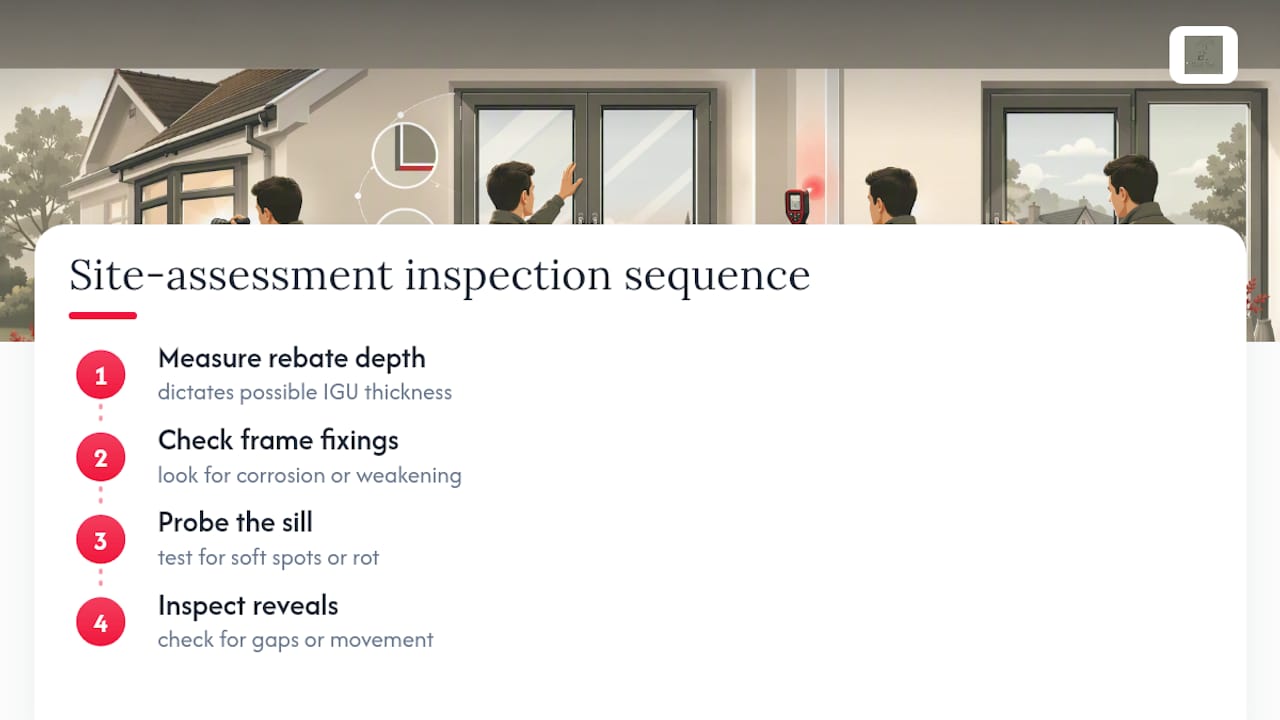
A proper site assessment starts with measuring rebate depth, since that number determines which IGU thickness is even physically possible. Installers also check frame fixings for corrosion, probe the sill for soft spots, and examine the reveals where the frame meets the wall for gaps or movement.
Staging matters more than homeowners usually expect. Experienced crews work room by room, protecting floors and furnishings, and sequence the job so you're never without secure, weatherproof windows overnight. Painting touch-ups, hardware sourcing, and finishing work around the new glazing all get coordinated as part of the same project rather than left for you to chase separately.
Site assessment and retrofit coordination can be managed as part of broader renovation work, encompassing everything from initial inspection through to coordinating the trades needed to complete the job properly.
Does Retrofit Double Glazing Affect Property Value or Need Council Approval?
Energy efficiency upgrades generally support resale value, since buyers increasingly ask about comfort and running costs during inspections, though the effect on any specific sale price depends on your local market and the buyer's priorities. A well-executed retrofit that preserves a character home's original look tends to appeal more to buyers than an obviously mismatched replacement window, particularly on period properties where street appeal matters.
On approvals, most straightforward retrofit jobs don't trigger building consent, since inserting an IGU into an existing rebate typically doesn't change the window's structural performance under the Window & Glass Association's guidance. That's the general rule, not a guarantee for every property, and heritage overlays or strata rules can still impose their own approval requirements even when general building codes don't.
Regional conditions can add another layer. In bushfire-prone areas, Queensland Government guidance on building in these zones notes that altering glazed openings can trigger additional resilience requirements beyond standard retrofit practice. If your property sits in a designated bushfire zone, raise that with your installer before assuming a standard retrofit approach applies. The safest move on any regulatory question is checking with your local council or planning authority before work starts, especially if your home carries a heritage listing or sits within a protected precinct.
When I'd Recommend Retrofit vs. Replacement
If your frames are sound and you'd rather keep the character of your existing windows than swap them for something generic, retrofit is usually the right call, especially on a tighter budget. It gets you real comfort gains without the cost or disruption of tearing out joinery that's still doing its job.
Replacement earns its higher price when frames have genuinely failed, when corrosion or rot has gone past the point of repair, or when your energy goals depend on airtightness that only a new thermally broken frame delivers. Coastal properties dealing with aggressive corrosion fall into this camp more often than homeowners expect. Match the fix to the actual condition of the window, not to whichever option sounds more modern.
— Sarah
Get a Site Assessment From Ariya Construction
A site inspection can help determine which windows need retrofit versus replacement by providing a hands-on assessment. Repair work, retrofit or replacement installation, and coordination between glaziers, painters, and finishing trades are typically managed together, so clients are not required to manage multiple contractors for a single job.

A site visit typically covers frame condition, rebate depth, and any remedial work needed before glazing goes in, and you'll walk away with a fixed quote rather than a vague estimate. Homes with older openings often benefit from looking at interior doors at the same time, since upgrading doors alongside windows closes more of the draft points that windows alone don't fix. If you want a straight answer on whether your windows are retrofit candidates or need full replacement, book a site inspection with Ariya Construction and get a fixed quote based on what your home actually needs.
Sources
This article draws on the Window & Glass Association's retrofit glazing standard, RetroGLAZE's retrofit versus replacement comparison, Axiom Eco Homes' cost and methods guide, ENERGY STAR's guidance on storm and high-performing windows, and Queensland Government guidance on bushfire-prone building.
- WG-46103.15 Retro-fitting double glazing — Window & Glass Association NZ (2023)
- Should I retrofit or replace my existing windows? - RetroGLAZE
- Retrofit double glazing methods and costs — Axiom Eco Homes
- Building in bushfire-prone areas — Queensland Government
FAQ
Is Retrofit Double Glazing Worth It?
For homes with sound frames, yes: retrofit delivers meaningful comfort, noise reduction, and energy gains at a lower cost and with less disruption than full replacement, provided the frame material and depth support it.
Can You Retrofit Double Glazing to Existing Windows?
Most timber, aluminum, and uPVC frames can accept a retrofit IGU or secondary glazing panel, as long as the frame itself is structurally sound and has adequate rebate depth for the chosen unit.
How Much Does It Cost to Retrofit Double Glazing?
Costs vary significantly by window size, glass specification, and frame condition, and can approach full replacement pricing when extensive joinery repair or heritage-matched detailing is required, so a site-specific quote is the only reliable number.
What Is the Alternative to Double Glazing in Australia?
Secondary glazing, sometimes called a storm window or interior panel system, is the main alternative where full double glazing isn't feasible, delivering lower performance than a sealed IGU but at reduced cost and disruption.
What's the Difference Between Secondary Glazing and a Retrofit IGU Insert?
Secondary glazing adds an interior panel without touching the original window, while a retrofit IGU insert removes the single pane and fits a sealed double-glazed unit into the existing rebate, delivering stronger thermal performance.