
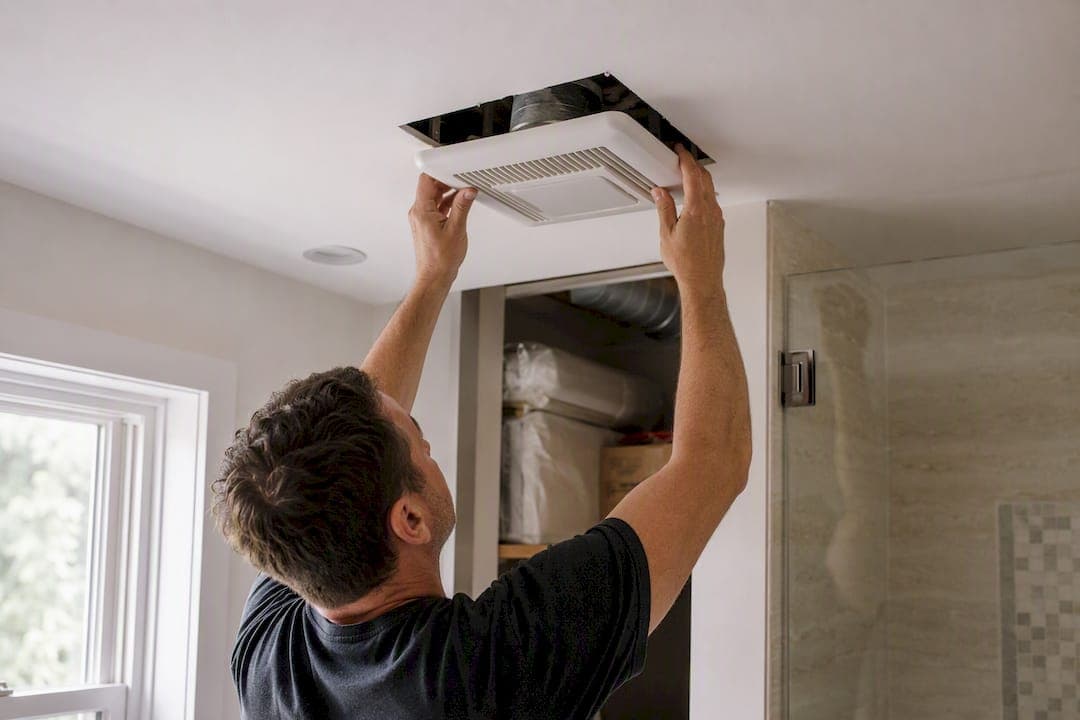
For most bathrooms, the correct fix is a ducted exhaust fan sized to roughly 1 CFM per square foot of floor area, with a 50 CFM floor, vented straight to the outside. Windowless or apartment bathrooms often do better with an inline fan or a decentralized wall unit. Whatever you choose, one rule overrides everything else: the exhaust has to terminate outside the building. Never into an attic, never into a wall cavity.
TL;DR:
- The exhaust fan must vent directly outside, never into an attic or wall cavity, to prevent moisture buildup and mold growth.
- Fans should be sized at 1 CFM per square foot, with a minimum of 50 CFM, and account for additional factors like long duct runs or multiple fixtures.
- Proper ducting with rigid or smooth materials, minimal bends, and sealed joints is critical for fan performance and longevity.
- Noise level, humidity sensors, timers, and ENERGY STAR ratings significantly influence whether the fan will be used consistently.
- For windowless bathrooms, inline or decentralized fans are the best options, but ductless fans are only a temporary supplement and must be paired with dehumidifiers.
Table of Contents
- Bathroom Ventilation Solutions: What Your Options Actually Are
- How to Choose the Right Fan: Sizing, Noise, and Controls
- Installation and Ducting Best Practices Every Homeowner Should Demand
- Ventilating a Bathroom Without a Window
- Keeping the System Working: Maintenance and Replacement Signs
- What Bathroom Ventilation Projects Actually Cost
- How Ariya Construction Handles Ventilation in a Bathroom Renovation
- What Homeowners Get Wrong About Bathroom Ventilation
- Ariya Construction: Ventilation Done as Part of a Real Renovation
- Sources
Bathroom Ventilation Solutions: What Your Options Actually Are
Every bathroom ventilation solution falls into a handful of categories, and picking the wrong one for your layout is the most common renovation mistake we see.
- Ceiling-mounted exhaust fans — the standard retrofit fix, mounted directly above the shower or toilet, ducted through the roof or wall.
- Inline (remote) fans — the motor sits in the attic or a roof void, connected by duct to a simple grille in the ceiling, which cuts noise dramatically.
- Wall fans — vent horizontally through an exterior wall, useful when roof access is blocked or the bathroom sits on an outside wall.
- Decentralized single-room units — compact through-wall fans with their own small motor, common in apartments and additions.
- ERV/HRV systems — recover heat or energy from exhausted air, worth it in cold climates or highly insulated new builds.
- Ductless recirculating fans or dehumidifiers — filter and recirculate air rather than exhaust it outside; a supplement, not a real substitute.
New builds and full renovations usually get ceiling fans with roof-mounted ducting. Retrofits with tight attic access often lean on inline motors or decentralized units instead.
How to Choose the Right Fan: Sizing, Noise, and Controls
Start with size, not brand. The baseline rule is 1 CFM per square foot of floor space, with 50 CFM as an absolute minimum even in a small powder room. Add capacity for a shower, a jetted tub, or a long duct run with multiple bends, since static pressure eats into real-world airflow.
Sone rating matters more than most homeowners realize. Consumer Reports testing shows airflow and noise vary widely between models, and fans built around 4-inch ducting typically outperform 3-inch units when raw CFM is the priority. A fan under 1.0 sones runs near-silent; anything above 3 sones tends to get switched off out of habit, which defeats the whole point of installing it.
Beyond size and noise, feature choices decide whether the fan actually gets used:
- Humidity sensors trigger the fan automatically when moisture spikes, so no one has to remember to flip a switch.
- Timers let the fan keep running after you leave the room, clearing lingering steam.
- Motion sensors pair well with timers in bathrooms that get quick, frequent use.
- ENERGY STAR-rated fans cost less to run continuously, which matters if you're using the fan as a 24/7 low-speed exhaust rather than an on/off switch.
Installation and Ducting Best Practices Every Homeowner Should Demand
The fan itself is only half the job. Poor ducting is the reason a "good" fan performs badly, and it's the single most common defect we find during renovation assessments.
- Vent to the exterior, full stop. Ducting into an attic or wall cavity traps moisture where you can't see it, and that leads to rot and hidden mold long before anyone notices a smell.
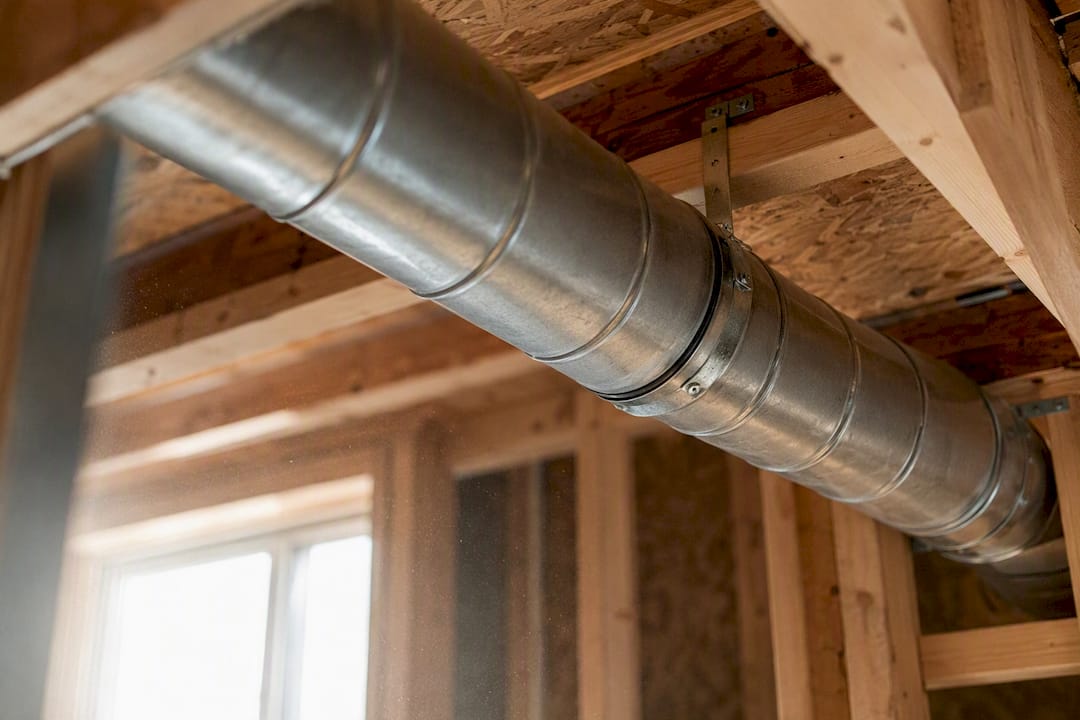
- Choose rigid or smooth duct over flexible tubing wherever the run allows it. Rigid metal duct moves more air with less noise.
- Minimize elbows. Every 90-degree bend effectively subtracts about 5 feet from your allowable duct length, so a run with three bends needs a shorter physical distance or a bigger fan to compensate.
- Insulate any duct passing through unconditioned space to stop condensation from forming inside the ductwork itself.
- Seal every joint with mastic or UL-approved metal tape, never standard cloth duct tape, which dries out and fails within a few years.
- Confirm electrical protection. Fan circuits in wet zones generally need GFCI protection, and any roof or wall penetration should go to a licensed electrician or roofer, not a weekend DIY job.
- Plan for makeup air. A door undercut or transfer grille keeps the bathroom from running negative pressure once the fan kicks on.
Pro Tip: Ask your installer to show you the exterior termination point before they close up the ceiling. A roof cap with a working damper is easy to verify in five minutes and nearly impossible to check once the drywall is patched.
Ventilating a Bathroom Without a Window
Windowless bathrooms and cramped apartment layouts rule out the simplest ducting path, but they don't rule out proper ventilation. Mechanical ventilation is genuinely necessary here, since a window alone was never a reliable moisture solution even in bathrooms that have one.
- Inline fans routed to the nearest exterior wall or roof keep the motor noise out of the room while still hitting full CFM targets.
- Decentralized through-wall HRV or ERV units handle single-room ventilation with heat recovery built in, avoiding long duct runs entirely.
- Ductless recirculating fans filter air but don't remove moisture from the building, so treat them as a stopgap, not a real fix, and pair them with a portable dehumidifier if that's genuinely the only option.
- Building a soffit or duct chase costs more up front but is worth it whenever it turns an impossible run into a short, straight one.
Keeping the System Working: Maintenance and Replacement Signs
A neglected fan quietly loses half its rated airflow within a few years, usually from dust buildup nobody notices until the mirror stays foggy long after the shower ends.
- Remove and vacuum the grille every three to six months; a clogged grille is the single biggest silent killer of airflow.
- Check the exterior roof or wall cap once a year to confirm the damper opens freely and isn't blocked by debris or nesting insects.
- Watch for warning signs: humidity that lingers more than 20 to 30 minutes after a shower, a motor that's grown noticeably louder, a burning smell, or visible mold creeping along the ceiling line.
- Inspect duct runs for sagging flex duct, which restricts airflow at the low points where condensation pools.
- Plan on replacement around the 10-year mark, sooner if the motor's straining or the noise has crept up over time.
Pro Tip: If the fan sounds fine but the mirror still fogs for half an hour after a shower, the motor probably isn't the problem. Check the exterior cap first. A stuck or blocked damper is the most common culprit and the cheapest one to fix.
What Bathroom Ventilation Projects Actually Cost
Budgets vary a lot depending on whether you're swapping a fan or opening up a roof.
- Simple fan swap (same location, existing ducting reused): the fastest and cheapest job, usually done in a few hours.
- Full ducted install with new roof penetration: costs more and takes longer, since it involves roofing work and flashing to keep the seal watertight.
- Inline fan installation: sits in the middle, with extra labor for running duct to a remote motor location.
- HRV/ERV systems: the highest upfront cost of the group, offset over time by lower heating and cooling losses.
When you're getting quotes, ask every contractor for the target CFM, the planned duct route and material, and what warranty covers the install itself, not just the fan's manufacturer warranty. Permits usually get pulled whenever roof or structural work is involved.
How Ariya Construction Handles Ventilation in a Bathroom Renovation
We don't spec a fan before walking the site. Every bathroom renovation starts with checking existing ducting, roof or wall access, and any moisture damage already hiding behind the tile, because that assessment decides whether a simple swap or a full reroute is the right call.
From there we sequence the trades so waterproofing and finishes aren't compromised. Electrician, roofer, and builder each have a specific window, and that order protects the ceiling and roof seal. We favor rigid duct runs, sealed joints, and humidity-sensor controls because they hold up over time, and every install carries a workmanship warranty. If you're unsure what your current setup is actually doing, ask about an on-site ventilation audit before committing to a full renovation scope.
What Homeowners Get Wrong About Bathroom Ventilation
Homeowners chase the wrong variable almost every time. They shop for a quiet fan or a cheap fan, then bolt it onto ducting that was never designed to carry the airflow it's rated for. Sizing and noise both matter, but neither one matters if the duct run has four elbows and terminates in an attic instead of outside.
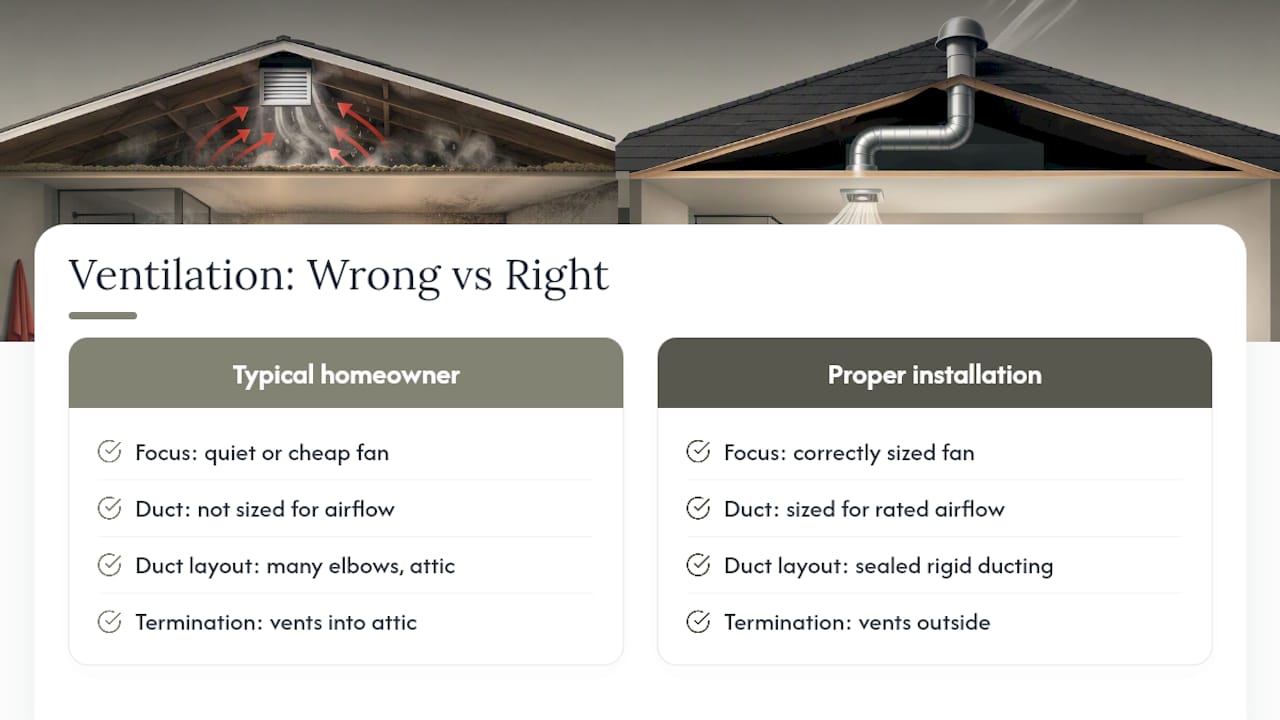
Hire a professional the moment the job involves a roof penetration, a duct run longer than a few feet, or any hint of existing mold. Electrical uncertainty is also a hard line. Guessing at GFCI requirements is how small jobs turn into insurance claims.
A fan installed once, correctly, with sealed rigid ducting and the right controls, will outlast two or three cheap replacements bought to fix a problem that was never the fan's fault.
— Sarah
Ariya Construction: Ventilation Done as Part of a Real Renovation
Ariya Construction is the option for homeowners who want ventilation handled correctly the first time, not patched together between a fan purchase and a weekend DIY attempt. We build ducting, sealing, and control choices into the bathroom renovation itself, so the fan you get matches the room, the roof access, and the moisture load it actually needs to handle.

That matters most for the readers this article was written for: people dealing with a windowless bathroom, a tricky roof line, or a fan that's clearly underperforming but no clear sense of why. Rather than guessing at CFM ratings or duct routes on your own, our team assesses the existing setup, coordinates the electrician and roofer where penetrations are involved, and installs with sealed rigid ducting and warranty-backed workmanship. If your bathroom renovation is on the horizon, get in touch with Ariya Construction and ask about a ventilation assessment as part of the project scope.
Sources
The Building America Solution Center covers exterior venting rules and duct sizing in technical detail. Viessmann's ventilation guide explains decentralized and heat-recovery options. Consumer Reports benchmarks fan noise and airflow. This Old House offers practical runtime and control tips.